

As early summer arrives, a gentle breeze sweeps across the Yimeng region. Zhucun Village in Caozhuang Town, Linshu County, Linyi City, Shandong Province, is bursting with vitality.
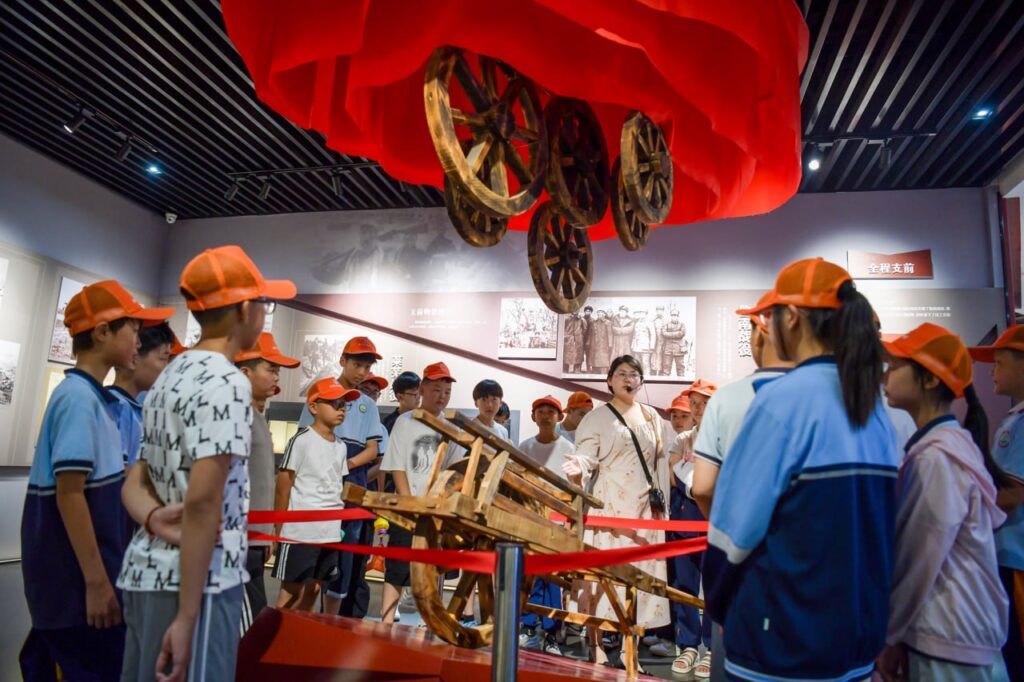
Inside the Yimeng Frontline Support Museum, several students on a study tour bend forward as they push vintage handcarts. The wheels creak along, creating the sensation of traveling back to an era marked by war and hardship. “These are the same types of carts that local villagers once used to support the front lines,” a guide at the Zhucun Red Tourism Area explains softly. The students listen attentively, immersing themselves in the remarkable history of a time when “the last handful of grain was offered as military rations.”
In the shops at the village entrance, woven willow baskets and specialty agricultural gift boxes are neatly displayed. Visitors come and go, selecting their favorite “red-themed souvenirs.” This well-known revolutionary stronghold village is bringing history to life, telling its stories to a new generation in vivid and engaging ways.
For more than 80 years, the story of the “Steel Eighth Company Saving Zhucun” has been passed down from generation to generation, serving as a living embodiment of the enduring Yimeng Spirit. Rather than relying on formulaic presentations, Linshu County has chosen to revive red memories through authentic local stories.
Seventy-seven-year-old Wang Jingchen is one of the village’s veteran volunteer guides. For more than a decade, he has walked the streets and lanes of Zhucun, passionately recounting the story of the Battle of Zhucun, the villagers’ overnight efforts to deliver military supplies, and the countless families who cared for wounded soldiers during the war.
“Seeing the artifacts left behind from those battles and listening to an elder explain the village’s revolutionary history is far more moving than reading about it in a book. It helped me truly understand the significance of the Yimeng Spirit,” said Ms. Wang, a visitor from Jiangsu Province, after completing the tour.
These immersive red tourism experiences have attracted growing numbers of visitors to the old revolutionary base area, bringing both popularity and economic opportunities. Capitalizing on the rising demand for red-themed educational travel, Linshu County has actively promoted the integration of culture and tourism, linking red study tours, rural sightseeing, and folk culture experiences into a comprehensive tourism chain.
Villages surrounding the scenic area have undergone a quiet transformation. Vacant farmhouses have been converted into specialty rural guesthouses, while homemade pancakes, traditional willow weaving, and locally inspired cultural products have all benefited from the growth of red tourism. Once ordinary local specialties from the countryside, these products have become sought-after items among visitors. Many villagers have found employment and increased their incomes by participating in the red tourism industry right on their doorstep.
The transformation of Zhucun is a vivid example of how Linshu County has leveraged its revolutionary heritage to drive development. In recent years, the county has created multiple premium red-themed study tour routes, welcoming more than 100,000 study-tour participants annually. These programs have boosted sales of local agricultural products and handicrafts while generating multiple benefits, including increased tourist traffic, higher tourism-related income, and improved rural development.
Today, the Yimeng Spirit is evolving from a static historical display into a dynamic force for development, delivering tangible benefits for rural revitalization and income growth while continuing to inspire future generations.