
With the accelerating pace of artificial intelligence (AI), blockchain technology, and the digitization of real-world assets (RWA), the global digital finance industry is ushering in a new round of development opportunities.
In recent years, from traditional financial institutions to technology companies, an increasing number of market participants have begun to focus on AI intelligence, asset tokenization, and Web3 infrastructure development. The industry generally believes that the future development direction of digital finance will not be limited to digital asset trading, but will achieve a more efficient, secure, and transparent value circulation between real-world assets and the digital economy through the integration of AI, RWA, and blockchain technologies.
Against this backdrop, the global AI quantitative computing power financial ecosystem platform CLV was officially launched, dedicated to building a new generation of digital financial ecosystem integrating AI intelligent quantitative analysis, RWA real-world assets, computing power economics, decentralized trading, and community governance.
Building a digital financial infrastructure that integrates AI and RWA
It is understood that the CLV ecosystem is supported by Singapore-based fintech company Chintai, which provides the underlying technology and ecosystem support. The platform uses AI-powered quantitative technology as its value engine and RWA (Real Estate Assets as the foundation) as its value base. Through blockchain technology, it achieves asset digitization, value circulation, and ecosystem collaboration, exploring a more sustainable development model.
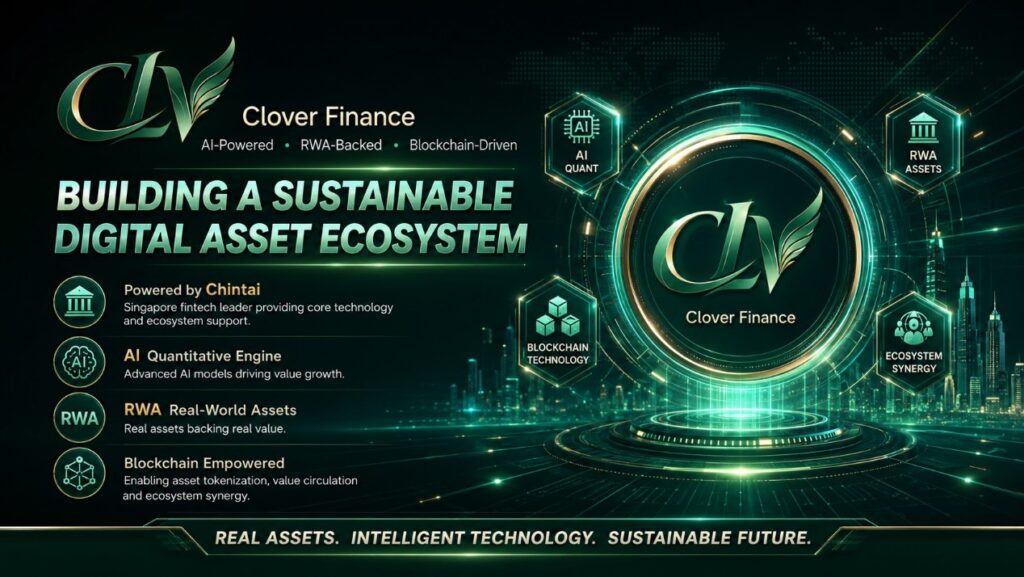
Unlike traditional digital asset projects, CLV does not focus on developing a single product, but rather on building a complete ecosystem around the digital finance industry chain.
Currently, the platform is planned to cover multiple modules including RWA real-world asset digitization, AI-powered intelligent quantitative trading, digital asset management, liquidity management, decentralized trading, and community governance, aiming to form a complete closed loop of value creation, value circulation, and value sharing.
AI-driven quantification becomes the core driving force of the platform.
Artificial intelligence is gradually changing the way the financial industry operates.
The CLV platform's self-developed Sentinel-AI intelligent quantitative system integrates machine learning, multi-strategy trading models, automated execution systems, and risk control algorithms to conduct real-time data analysis of multiple global financial markets and dynamically adjust trading strategies based on different market environments.
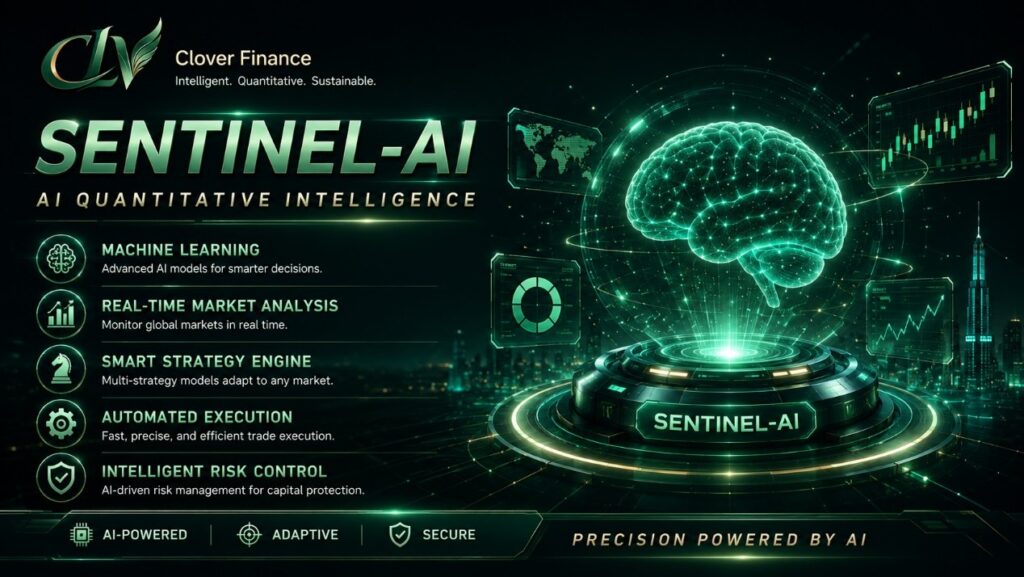
The platform stated that the core goal of the AI quantitative system is not to replace traditional finance, but to improve data processing efficiency, optimize risk management capabilities, and enhance the automation level of digital financial infrastructure through intelligent algorithms, thereby providing continuous technical support for the platform ecosystem.
Promoting the digital development of real assets
As Real-World Assets (RWA) has become a significant development direction in the global blockchain industry in recent years, an increasing number of real-world assets are exploring on-chain digitization.
CLV aims to connect real-world assets such as real estate, hotels, commodities, and natural resources through blockchain technology, promoting digital asset management and improving asset transparency and liquidity.
Industry insiders believe that RWA will not only enrich digital financial application scenarios but also further promote the deep integration between traditional finance and the Web3 ecosystem, creating more practical application value for the digital economy.
Computing power economy becomes a carrier of ecological value
Beyond AI and RWA, CLV also proposed a computing power value system.
Within the platform ecosystem, computing power not only represents computing resources but also serves as a crucial measure of ecosystem rights.
The platform explains that computing power can be used to connect multiple ecosystem modules, including AI quantitative services, community contributions, liquidity participation, and governance rights, aiming to establish a more unified and efficient value distribution mechanism.
Through computing power as a digital carrier, different business segments can form closer collaborative relationships, providing support for the sustainable development of the ecosystem.
A five-layer ecosystem architecture creates a complete digital finance closed loop.
To achieve the long-term development of its digital finance ecosystem, CLV has designed a five-layer ecosystem architecture, comprising an AI quantitative layer, a computing power layer, a liquidity layer, a decentralized trading platform, and a DAO governance layer.
The AI quantitative layer is responsible for value creation; the computing power system connects ecosystem interests; the liquidity system improves capital efficiency; the decentralized trading platform handles the circulation of digital assets; and the DAO governance layer further enhances community participation and ecosystem collaboration capabilities.
The platform believes that this multi-layered collaborative architecture will help improve the overall operational efficiency of the ecosystem and enhance future business expansion capabilities.
Continuing to expand into global markets
According to the platform's plan, CLV will continue to improve its AI quantitative capabilities, expand more RWA real-world asset application scenarios, and further advance its global market layout.
Simultaneously, the platform will strengthen technology research and development, ecosystem cooperation, and international expansion, actively exploring more applications of digital financial infrastructure in cross-border payments, asset digitization, and global value networks.
As the AI, blockchain, and RWA industries continue to mature, CLV hopes to leverage its open ecosystem to collaborate with more partners to drive innovative development in the digital finance industry.
Looking to the future
Currently, AI, RWA, and Web3 are becoming important development directions for the global digital economy.
Industry insiders generally believe that the focus of future competition in digital finance will gradually shift from competition over single products to the construction of infrastructure and ecosystems.
CLV stated that it will continue to invest in technological innovation, the digitization of real assets, and global ecosystem collaboration, exploring new models for the deep integration of AI, blockchain, and the real economy, providing more open, transparent, and sustainable infrastructure support for the development of global digital finance.