

On July 17, 2026, the China Civilized Rural Ethos Conference visited Zhu Village in Linshu, Shandong Province. As a sub-venue dedicated to the inheritance of outstanding agricultural civilization, this historic red village has taken agricultural heritage as its foundation and revolutionary spirit as its core, forging a path of integrated development where farming traditions, red culture, and rural revitalization thrive together.
The agricultural heritage of Zhu Village is preserved in a folk tradition that has continued for 82 years. On New Year’s Eve in 1944, Japanese invaders and their puppet troops launched a surprise attack on Zhu Village. The Steel Eighth Company rushed to the village for reinforcements upon receiving the order, and 24 soldiers sacrificed their lives heroically. On the first day of the Lunar New Year that followed, villagers offered the first bowl of dumplings to commemorate the fallen heroes, and this tradition has continued for 82 years. “Without the Steel Eighth Company, there would be no Zhu Village today. We will carry on this tradition forever.” Wang Jingchen, an elderly volunteer guide who has dedicated 14 years to public storytelling, uses the local dialect to recount the history of the War of Resistance, passing down the Yimeng spirit of deep unity between the military and the people, and their shared commitment through life and death, from generation to generation.
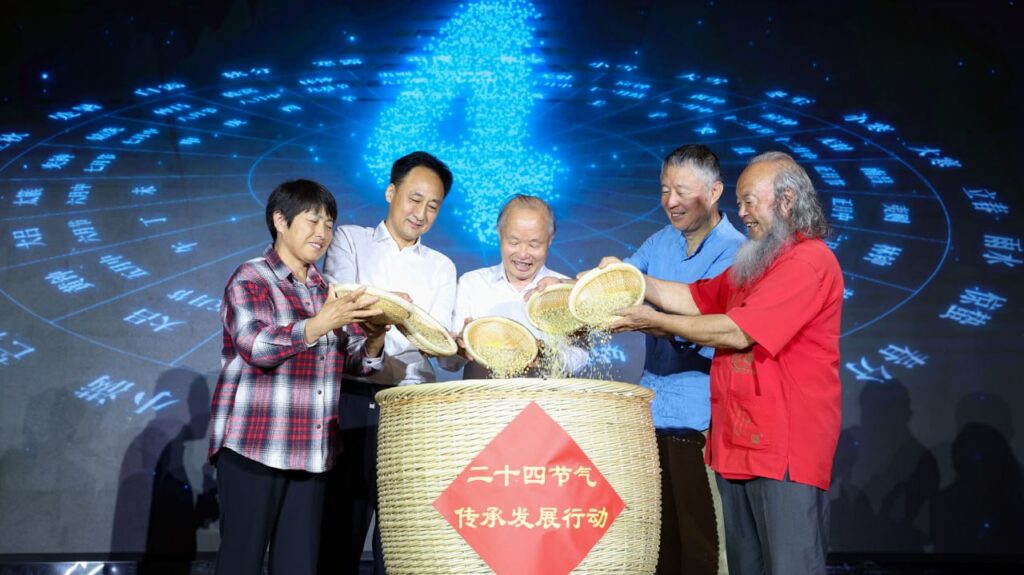
Red culture has become part of Zhu Village’s heritage, but the roots of Zhu Village remain firmly planted in the soil.
The willow weaving craft of Zhu Village represents an agricultural livelihood that has continued on this land for hundreds of years. Local people have made a living through willow cultivation and weaving for generations. At one time, this traditional craft faced the danger of disappearing, but generations of craftsmen preserved it through their dedication and perseverance, allowing willow weaving to flourish once again. Zhang Zhiquan started from a small processing workshop and spent more than three decades developing exceptional skills, becoming able to “recognize willow strips by touch and understand weaving techniques at a glance.” By combining willow with materials such as iron, wood, rattan, and grass, and incorporating modern aesthetics and Yimeng cultural elements, he has created more than 20,000 types of products that are sold both domestically and internationally. He has also established free processing sites, helping nearly 30,000 farmers find employment close to home, with an average annual income increase of more than 20,000 yuan per person.
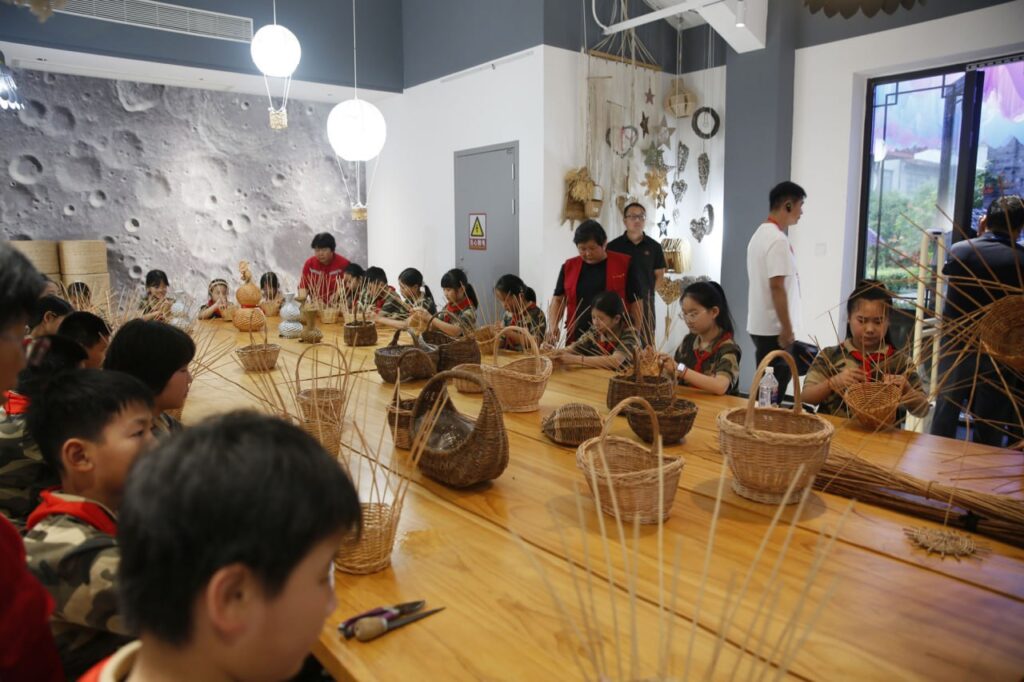
Yang Jinbang, a national-level inheritor of intangible cultural heritage, has worked alongside willow weaving for half a century. He understands that for traditional intangible cultural heritage skills to survive and thrive, they must preserve their roots while embracing innovation. To this end, he visited veteran craftsmen and cultivation experts, compiling and collecting more than 30 volumes of design patterns, over 10,000 physical samples, and more than 30,000 images, dedicating himself to accumulating creative resources. By integrating the artistic essence of painting, carving, and other disciplines, he developed a distinctive artistic style. In 1987, his “Willow-Woven Fruit Tray” was selected for the National Arts and Crafts Exhibition. Since then, his outstanding works have continued to receive recognition, winning 126 national, provincial, and municipal awards, and becoming the “golden calling card” of Linshu willow weaving.
From a bowl of dumplings that carries forward virtue to a strand of willow that embodies craftsmanship, Zhu Village has integrated outstanding agricultural civilization, red cultural heritage, and contemporary rural values. It has preserved the spiritual roots of the countryside while bringing renewed vitality to agricultural culture in the modern era, providing a visible and replicable rural example for the inheritance of agricultural civilization and the cultivation of a civilized rural ethos across China.