
Rooted in local communities, intangible cultural heritage is bringing new vitality to rural revitalization through skilled craftsmanship. In Diantou Town, Linshu County, Linyi City, Shandong Province, the Wu Family rope weaving technique, with a history spanning more than a century, has continued to evolve through active preservation and innovation, thanks to its unique family-inherited craftsmanship. It has not only preserved a long-standing cultural tradition but also developed into a new industry that benefits local residents, injecting strong momentum into rural cultural revitalization and increasing people’s incomes.
Entering the Wu Family Rope Weaving Intangible Cultural Heritage Workshop in Diantou Town, visitors are greeted by a vibrant scene of weaving activity. Villagers sit at their workstations, twisting ropes, tying knots, weaving strands, and shaping finished pieces, their movements skilled and fluid. Ordinary cotton, linen, and colorful jade-like cords are transformed under their fingertips into exquisite rope weaving cultural and creative products featuring beautiful designs and auspicious meanings.
“The Wu Family rope weaving craft is a family skill passed down from our ancestors, with a history of more than one hundred years. In the beginning, it was mainly used to make agricultural binding ropes and folk blessing knots. After generations of inheritance and refinement, we have now mastered more than ten traditional techniques, including the Pan Chang knot and the Auspicious knot,” Wu Qingjuan, an inheritor of the Wu Family rope weaving technique, told reporters.
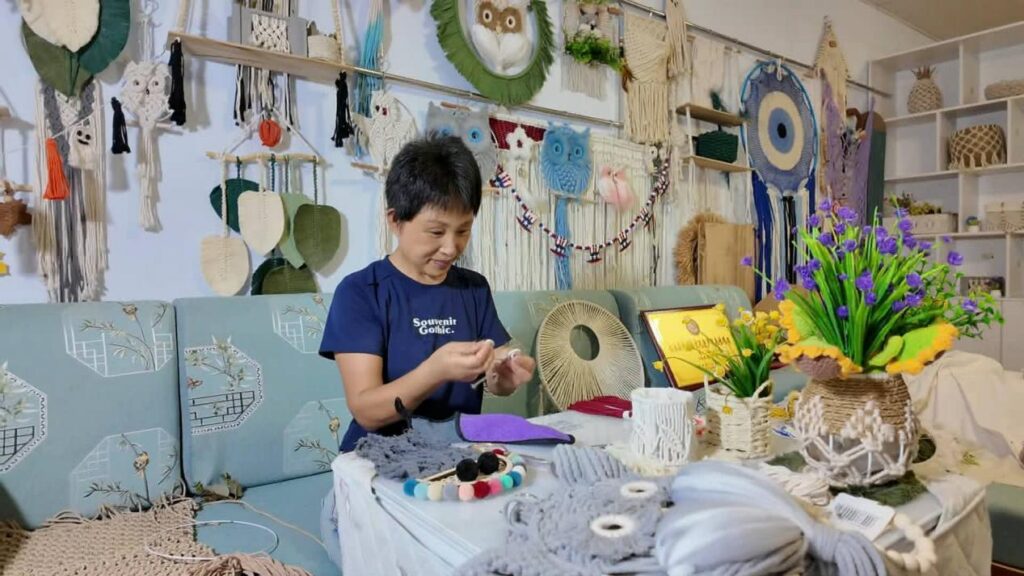
Unlike the widely known willow weaving craft of Linshu, the Wu Family rope weaving craft focuses on small cultural and creative products. With their compact size, portability, aesthetic appeal, and ease of promotion, these products have clear distinctive advantages, becoming a unique local “Shandong Handmade” rural cultural project. With exquisite craftsmanship and distinctive creative styles, the products have also entered international markets, being steadily exported to Europe and the United States through foreign trade companies. With sufficient orders throughout the year and stable production and sales, the craft has developed into a sustainable intangible cultural heritage industry that provides steadily increasing incomes.
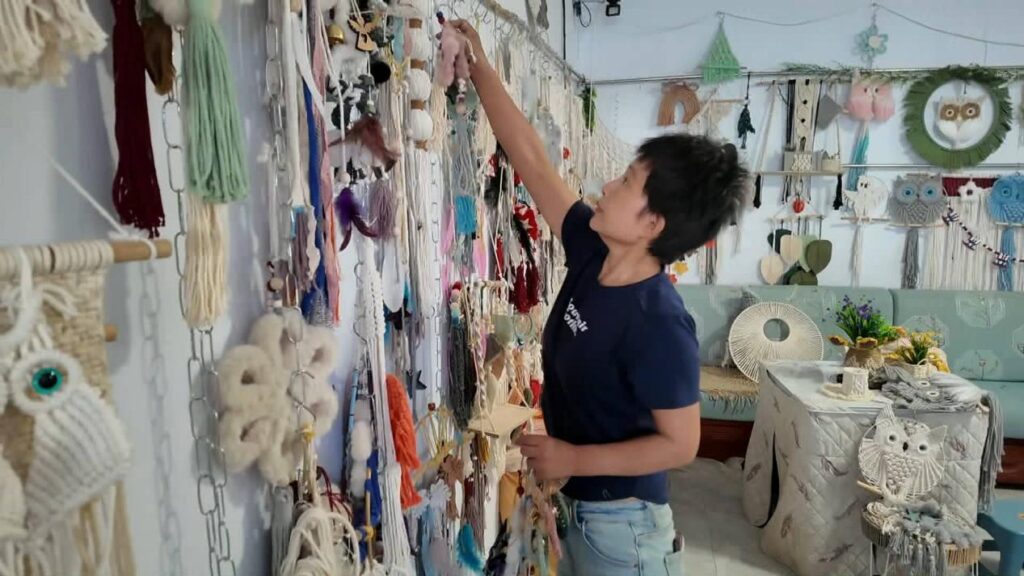
To revitalize intangible cultural heritage resources and create nearby employment opportunities for local residents, the workshop has moved beyond the traditional workshop model by establishing multiple processing sites throughout the town, with a focus on recruiting women who remain in villages to work from home. “In the past, I stayed at home to take care of my children and had no income. Now I can earn some money for daily expenses here. I think it’s great because it doesn’t prevent me from looking after my elderly family members and children,” said Wu Shuhua, a villager from Diannan Village, Diantou Town, with a smile.
Today, the Wu Family rope weaving craft is not only an important carrier of local cultural heritage but also a distinctive industry that helps increase villagers’ incomes and supports rural development. It has truly achieved a multi-win outcome by enabling the living inheritance of intangible cultural heritage, the flourishing development of culture, and stable income growth for local communities.