
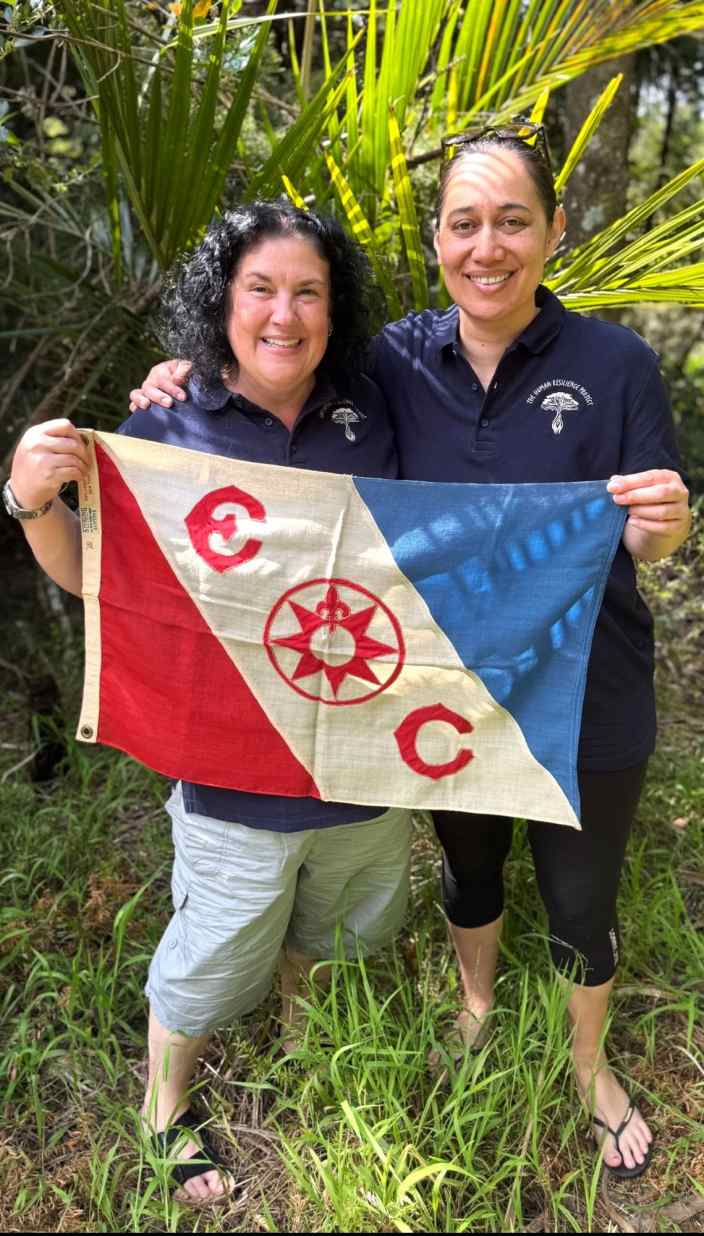
Explorers Club Flag Mission Identifies Universal Principles of Human Resilience
WHANGAREI, New Zealand - The Human Resilience Project (THRP) today released major scientific findings from its second international field expedition, conducted under Explorers Club Flag #12 and with the "Explorer" watch, an Explorers Club Rolex. The investigation revealed a powerful, culturally grounded model of human resilience, with potential global mental health applications.
Led by Principal Investigator Dr. Constance Scharff, member national of the Explorers Club and an internationally recognized expert in trauma, resilience, and non-Western models of understanding mental health, the Aotearoa expedition is part of THRP's three-year, ten-nation research program. This unprecedented initiative brings researchers directly into some of the world's most remote communities to identify universal structures of resilience that may improve human psychological resilience and wellbeing worldwide.
The Māori were selected for this research because they have achieved unusually strong outcomes in resisting cultural erasure and both safeguarding and revitalizing language, political voice, and ecological stewardship. Māori invited Dr. Scharff into their homes and communities for interviews guided by Indigenous research methodologies.
Key Findings: THRP identified five values that form a robust model of resilience among Māori:
- Whakapapa (genealogical identity) provides deep belonging to a vast network of ancestors, leading to long-term perspectives in decision-making.
- Whanaungatanga (mutual responsibility) emphasizes caring for one another and fostering relationships in the community. Relationships are valued over material wealth.
- Whenua (relationship to land and ocean) underpins the understanding that without healthy land and waterways, nothing flourishes. Humans are intertwined with our environments.
- Te Reo Māori (language), the use and revival of the Indigenous language, particularly among younger people, supports identity revitalization and renewal. Kura kaupapa Māori (a Māori language/centered education option) is seen as a vital piece of Māori maintaining and advancing autonomy.
- Humor functions as a powerful buffer against trauma and stress.
"These findings are significant," said Dr. Scharff. "The Māori show us what resilience looks like in practice: rooted in identity, community, and connection to place. Their openness makes it possible to build a comparative global framework that could be widely useful and uplifting. We are grateful and humble as we learn from communities around the world."
Results from Aotearoa and the preceding expedition to northern Kenya will inform THRP's comparative global framework as the project continues to eight other research sites.